Saturday, September 21, 2013

New Book by Fernando Gentilini on “Afghan Lessons”

Fernando Gentilini, an Italian diplomat who is currently director for Western Europe, Western Balkans, and Turkey for the European External Action Service, has just published a new book titled  “Afghan Lessons: Culture, Diplomacy, and Counterinsurgency” (Brookings, 2013)
The book was originally published in Italian ("Libero a Kabul", Editori Internazionali Riuniti, 2011) and has been translated by Angela Arnone.

Here is a short description by the publisher:
“For nearly two years, Fernando Gentilini lived in war-torn Afghanistan as a civilian envoy. From July 2008 to February 2010, Gentilini, a diplomat with twenty years of experience in crisis management and multilateral and European affairs, was the civilian representative of NATO, running a counterinsurgency campaign in the troubled nation. Afghan Lessons presents the fascinating story of Gentilini’s mission, taking readers on an eye-opening journey of Afghanistan: its people, its society, and its politics. Gentilini’s firsthand account looks at the nation through a kaleidoscope. He explores Afghan history, literature, and tradition, while also reflecting on the international mission in Afghanistan from both a diplomatic and military standpoint. In Afghan Lessons, Gentilini examines Afghan culture in an effort to understand some of the most basic questions of Western involvement: Why are we there? What does an international presence mean, and how can it help?.”

Fernando Gentilini, Afghan Lessons: Culture, Diplomacy, and Counterinsurgency,  Brookings Institution Press, 2013, pp. 320, $28.95
Afghan Lessons is available in the main online bookshops both hardcover and eBook formats (e.g. Amazon , Barnes & Noble)

For more information on the book and for the table of contents: http://www.brookings.edu/research/books/2013/afghan-lessons

Fernando Gentilini was born in Subiaco (Rome) on 2nd March 1962 and he joined the Italian Diplomatic Service in 1990. He has served in the Italian Embassy in Addis Ababa and in the Italian Permanent Representation to the E.U. in Brussels. In 1999 he was seconded to the Policy Unity of the Secretary General/High Representative for the CFSP in Brussels and after that he has been deployed in several Balkan hot spots. In 2006 he was appointed Deputy Diplomatic Advisor to the Italian Prime Minister. In 2008 he was nominated NATO Senior Civilian Representative in Afghanistan. He is currently director for Western Europe, Western Balkans, and Turkey for the European External Action Service.
 --------------
For additional information on books published by Italian Diplomats consult: http://baldi.diplomacy.edu/diplo

Monday, June 03, 2013

Tradition and Innovation Diplomat 2.0: Stefano Baldi at TEDxUniTn

Stefano Baldi talks about innovation in diplomacy at a TEDx event in Trento (Italy).  He develops a few ideas on how tradition and innovation are a winning mix for a contemporary diplomat.


Here is the description of the video and the event:

Stefano Baldi is an Italian diplomat with a lifelong commitment to innovation and creativity applied to diplomatic activities. Now that he is the head of the Training structure of the Italian Ministry of Foreign Affairs, he is particularly engaged in emphasizing and experimenting with shaping the role of the XXI century diplomat. He will explain how being a diplomat today is a mix of tradition and innovation. In the era of web 2.0, currently characterized by Social Media, diplomats are challenged by constantly evolving ways of communication. Stefano will argue why an adequate and continuous training will empower the diplomat of the XXI century, the Diplomat 2.0, to be still an essential and irreplaceable resource for the country he/she represents. He regularly blogs on http://istitutodiplomatico.wordpress.com.

About TEDx:

In the spirit of ideas worth spreading, TEDx is a program of local, self-organized events that bring people together to share a TED-like experience. At a TEDx event, TEDTalks video and live speakers combine to spark deep discussion and connection in a small group. These local, self-organized events are branded TEDx, where x = independently organized TED event. The TED Conference provides general guidance for the TEDx program, but individual TEDx events are self-organized.* (*Subject to certain rules and regulations)

Saturday, May 12, 2012

Books written by Czech diplomats

I have received from Amb. Jaroslav Olša, jr. , current Czech Ambassador to Seoul, some interesting information  about Czech diplomat-writers. 

Here is the list of books that Amb. Olsa has kindly provided.


"A very basic list of Czech diplomats-writers of the last two decades

The first post-communist democratic foreign minister of Czechoslovakia (passed away last year) Jiří Dienstbier, wrote at least three books connected with foreign policy, one of his successors, Jaroslav Šedivý, has already published three volumes of his memoirs covering his ambassadorship in France, his ministerial times and the third one about his last posting as Ambassador to Brussels.
But the list of other Czech diplomats having varous books at their credit seems to be incredibly long as they are not only memoirs writers, but also historians or fiction writers.

- former Ambassador to Germany and Austria /and shortly Minister of Education/ Jiří Grůša was predominantly writer and only secondary a diplomat, who wrote numerous novels and non-fiction dealing with Central Europe, he also served as a president of PEN International a few years ago.
- current Czech Ambassador to Ireland Tomáš Kafka is a prominent essayist and poetry writer as it is also current Ambassador to the Netherlands Jaroslav Horák.
- former Ambassador to Thailand and Cambodia Jiří Šitler (now Ambassador to Romania) wrote three books on Czech(oslovak)-Thai and Czech(oslovak)-Cambodian relations.
- former Ambassador to Nigeria Juraj Chmiel (later became Minister for European Affairs) published a travelogue on West Africa.
- current Ambassador to Turkey (and previously to Portugal, Kenya and Brazil) Václav Hubinger published an encyclopedia of diplomacy and also an ethnography book on canibalism.
- former Ambassador to Ethiopia Zdeněk Poláček authored not only two dictionaries of Amharic but also translated widely from this language as well as Ge´ez.
- former Ambassador to Egypt Břetislav Vochala is an author of numerous books on Egyptology, as he is one of the leading world Egyptologists.
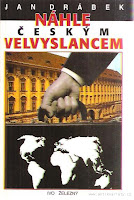
- former Ambassador to Kenya (and later on Director of Diplomatic Protocol) Jan Drábek wrote a pseudo novel about (his) experiences in East Africa and humorous tales about his work as a protocol chief, previously – while living in the United States and Canada – he was already published novelist.
- former Ambassador to Chile and Venezuela Jiří Jiránek wrote a travelogues about Chile and Venezuela and neigbouring countries, and a significant study on history of Czech immigration there.
- two former ambassadors to the Holy See (František X. Halas and Pavel Jajtner) also wrote their diplomatic memoirs, while the former one also a published a book about the modern history of a Sovereign Order of Malta.
- former Ambassador to Belgrade Judita Šťouračová wrote two books about trade diplomacy.
- former Ambassador to Jordan and later on Turkey Tomáš Laně wrote History of Turkey and at least one more book and also Czech-Turkish dictionary.
- former Ambassador to the Philippines and Venezuela Stašek Slavický published at least two titles on South East Asia.
- former charge d´affaires to Iraq during the late Saddam Hussein´s times Dušan Belica wrote (jointly with his son, who is a journalist) a kind of modern history of Iraq/diplomatic memoirs.
- former Ambassador to Thailand Jan Bečka wrote History of Burma.
- former chargé d´affaires to the DRC Pavel Mikeš published at least three books of translations from Amharic and Somali as well as an acclaimed travelogue about Ethiopia.
- former Ambassador to India Odolen Smékal was an award-winning poet writing in Bengali and also a translator from at least three Indian languaes and author of books and scholarly articles on India.
- former Ambassador to Hungary Marvan was a noted linguist and he published numerous books on the subject.
- former Ambassador to Slovenia and Kuwait and well-known Arabist Jana Hybášková (later on Member of European Parliament and currently EU Ambassdor to Iraq) wrote two books on her experience in the Middle East.
- former Ambassador to Ghana Vladimír Klíma published widely on African literatures, translated many African fiction and published at least two travelogues based on his work in West Africa.
 - current Ambassador to South Africa Blanka Fajkusová wrote a book about history of OECD.
- former Ambassador to Indonesia and Consul General to Karachi Jaroslav Olša (my father) published both Czech-Indonesian and Indonesian-Czech dictionary, edited and translated an anthology of modern Indonesian short stories as well as published legends and fairy tales from New Guinea and Malaysia.
- and - last but not least - myself, now Ambassador to the Republic of Korea and formerly to Zimbabwe, I have published book History of Zimbabwe, Zambia and Malawi (with Otakar Hulec), plus three titles on modern Zimbabwean art and one book about early Czech(oslovak) travellers in Korea and in edition edited and selected a dozen anthologies of science fiction

The reason for such a high number of writing ambassadors is in fact, that the newly democratic Czechoslovakia needed new diplomats, and a new service was thus based on experts from outside the diplomatic service. The 1990s thus saw untypical situation, when almost simultaneously the positions of ambassadors in Japan, China, India, Indonesia, Iran, Burma /non-resident/, Ethiopia, Ghana, Nigeria, DRCongo, Egypt, Turkey /to mention only non-European posts/ were occupied by experts in those countries and languages.

But the trend was already created, and at least dozen other active Czech diplomats has published at least one title, often travelogues (Jana Chaloupková has five titles on various Asian countries and Brazil on her credit), or novels (like Marek Toman), Markéta Hejkalová, formerly diplomat in Finland, became vicepresident of PEN International and a noted Czech novelist etc."

Thursday, March 01, 2012

Post Unification Italian Diplomacy

(AGI) - Rome, March 1 - How did Italian diplomacy contribute to the consolidation of of national unity and what role did it have in creating an Italian national identity? A conference entitled "Post Unification Italian Diplomacy" organized by the 'Costantino Nigra' National Association of Retired Diplomats, will attempt to answer the question in Rome tomorrow at the State Archives. The event was organized in cooperation with the archives and the Commission Rearranging and Publishing of Italian diplomatic documents of the Foreign Ministry. The conference, which will be opened and moderated by Ambassador Andrea Giuseppe Mochi Onory, president of the Costantino Nigra Association, will trace the history of Italian diplomacy during the period of the unitary state, from obtaining international recognition and completion of national unity up to the construction of overseas diplomatic facilities in the period between the two wars. Particular attention will be given to the experience of Costantino Nigra, who was Italian ambassador in Vienna, while other talks will cover Italian diplomatic activities in the Fascist period and its relations with colonial policy. (AGI).

Friday, January 06, 2012

2012 Calendar for Diplomats

A New Year has just started and 12 months of new professional challenges are ahead of us.
A new and original Diplocalendar has just been published by Diplofoundation (http://www.diplomacy.edu) 
 
The 2012 calendar visually introduces a selection of the main policy, organizational, and management challenges of today's world (e.g. budgetary cuts, reforms and multitasking).

You can take a look at the calendar (and further discuss the issues contained in it) at the page:
http://www.diplomacy.edu/2012
 
Through the same page it is possible to receive a copy of the Diplocalendar.
Just to give you an idea of the visual contents take a look at the January illustration concerning "Budget cuts".
 
Happy New Year!

Wednesday, September 21, 2011

Third diplomatic suspense novel for Adrian de Hoog

Adrian de Hoog, former Canadian diplomat, has just published a new diplomatic suspense novel. 

The novel is called Natalia’s Peace .  It is a story about a confidential diplomatic initiative in The Hague aimed at developing new ideas to advance peace within the framework of today’s security challenges.  It explores the causes of conflict today, such as kinship, belief systems and collective memories and fresh approaches for addressing them.  The substantive ideas are carried forward with a lively plot.
More information is available on the book’s website: http://nataliaspeace.com/
This is  the third de Hoog's diplomatic suspense novel.  The Berlin Assignment (2006) http://www.theberlinassignment.com/ was a spy story set in Berlin just after the Wall came down and unfolded against the backdrop of German reunification.  Borderless Deceit (2007) http://www.borderlessdeceit.com/ provided a foretaste of the loss of privacy in today’s digital world and the many challenges posed to the security of cyberspace diplomacy'.
Natalia’s Peace is widely available on Amazon sites in many countries and through numerous on-line retailers. 


DE HOOG Adrian, Natalia's Peace, Adytum Publishing, 2011, pp. 322.
Adrian de Hoog was in the Canadian diplomatic service for 30 years with postings in Nairobi, Bonn and Berlin (as consul general).  He worked in areas such as development assistance, nuclear non-proliferation, the global environment, G-7 and international economic issues, and as head of diplomatic training.


Sunday, September 18, 2011

Victor Comras and the Flawed Diplomacy

Victor Comras, former US diplomat, has published a new book: "Flawed Diplomacy: The United Nations and the War on Terrorism" (Potomac Books, November 2010). It provides an insider's look at, and tells the story of the United Nation's efforts to respond to terrorism as a threat to international peace and Security and how these efforts were shaped and sometimes sabotaged by conflicting forces and interest groups inside and outside the United Nations. It also provides some key recommendations for strengthening this international effort.

The book stems, in part, from his own experiences as one of the original five International Monitors charged by the Security Council with reporting on the actions taken by countries to respond to terrorism. It also delves into the history of the UN response to terrorism and provides extensive discussion of the roles played by the Security Council and General Assembly as well as the 1267, 1373 Counter Terrorism Committee, and the 1540 Committees.

The book has particular relevancy as we consider, ten years after 9/11, the progress made, and steps that still need to be taken to deal with the threat of international terrorism.
.
It is possible to review the Table of Contents and read the introductory chapter of the book on line at http://www.potomacbooksinc.com/Books/BookDetail.aspx?productID=209192

The Washington Institute held a special event to launch the book. They have posted a report of that event (and the audio) at http://www.washingtoninstitute.org/templateC05.php?CID=3271

The book is available through all major and on line bookstores, including, inter alia, Amazon.com at http://www.amazon.com/Flawed-Diplomacy-United-Nations-Terrorism/dp/1597974382/ref=sr_1_1?ie=UTF8&s=books&qid=1302968116&sr=8-1.

It is now also available on Kindle at http://www.amazon.com/Flawed-Diplomacy-Nations-Terrorism-ebook/dp/B0050SNSLK/ref=tmm_kin_title_0?ie=UTF8&m=AG56TWVU5XWC2
----------------
Victor D. Comras led the State Department's foreign policy trade control and sanctions programs for nearly a decade. He retired from the State Department in 2001 with the permanent rank of Minister Counselor. In May 2002 he was appointed by the UN Secretary General to serve as one of five international monitors charged with overseeing the implementation of Security Council measures against al Qaeda and the Taliban. And, in 2009 he was selected to serve as a member of the UN Panel of Experts on North Korea sanctions. Mr. Comras is a leading expert, author and lecturer on international trade regulation, sanctions, export controls and the global effort to combat terrorism and terrorism financing.

Sunday, September 11, 2011

Final words of departing UK Ambassadors

Matthew Parris (and Andrew Bryson) is the author of an interesting and original book titled "Parting shots. The undiplomatic final words of our departing ambassadors" (Penguin, 2010).
The book is a based on a BBC 4 radio series (broadcasted in 2006)  concerning final telegrams UK Diplomats wrote when leaving their country of assignment. They could say whatever they wished in their final telegram home, and they could be very frank about the cultures and countries in which they served. Some of these files were released to the BBC by the Foreign Office under the Freedom of Information Act. The older despatches - those written more than thirty years ago - are from the National Archives in Kew. Some of the text of the dispatches are available online (http://www.bbc.co.uk/programmes/b00n85t5)

Here is a short description of the book provided by the publisher:
"When leaving a foreign posting, Britain's ambassadors were encouraged to write a valedictory despatch until the practice was abolished in 2006. Unlike the usual style of the diplomatic bag, these last reports from foreign posts were unbuttoned, indiscreet and often very funny. There was much settling of scores, some poking fun of foreigners, a degree of moaning about the privations of Embassy life - and sometimes a bit of serious analysis too. Based on a very successful BBC radio series, Matthew Parris, who once worked for the Foreign Office and had the task of distributing the despatches, and Andrew Bryson have compiled an always entertaining and frequently hilarious volume of the best of them."

The book is available in many online libraries. 
Amazon.com provides the opportunity to read the initial pages http://www.amazon.com/Parting-Shots-Parris/dp/0670919284/ref=sr_1_1?ie=UTF8&qid=1315748856&sr=8-1

Thursday, April 28, 2011

Career Diplomacy: Life and Work in the US Foreign Service

Harry Kopp and Charles A. Gillespie, former US Diplomats, are the authors of the book Career Diplomacy: Life and Work in the US Foreign Service, which has been just published in its second edition and provides insights into the inner workings of the diplomatic service.
 
According to Lawrence S. Eagleburger, former Secretary of State the book is “The best description of life in the foreign service—its challenges, dangers, satisfactions, and fun—I have ever seen. It paints a superb picture of life abroad and at home, including both its good and bad aspects, and does a brilliant job of pointing out how our diplomacy must change if it is to meet the tremendous changes and challenges of the twenty-first century.”
 
The book has four parts: the instruction, the profession, the career, and the future foreign service.
 
Some excerpts of the volume can be downloaded at the dedicated site http://www.careerdiplomacy.com
Harry Kopp, Charles A. Gillespie, Career Diplomacy: Life and Work in the US Foreign Service, Georgetown University Press; 2011, pp. 301
 
The authors
Harry Kopp is a former foreign service officer and consultant in international trade. Kopp was Deputy Assistant Secretary of State for international trade policy in the Carter and Reagan administrations. His foreign assignments included Warsaw and Brasília. Kopp left the foreign service in 1985 More information about Mr. Kopp can be found at: www.HarryKopp.com.
Charles A. Gillespie entered the foreign service in 1965 and retired in 1995. His career included assignments as Deputy Assistant Secretary of State for Inter-American Affairs; American ambassador to Grenada, Colombia, and Chile, and Special Assistant to the President on the National Security Council Staff. He was a member of the American Academy of Diplomacy, the Business Council for International Understanding, and the Forum for International Policy. Gillespie passed away March 7, 2008.
---

Sunday, November 07, 2010

Sir Ivor Roberts edits Satow's Diplomatic Practice

Sir Ivor Roberts, former Ambassador of UK to Italy, has recently edited a new edition of the famous book Satow's Diplomatic Practice. This book was first published 90 years ago and has been revised four times since. This is the first revised edition for thirty years, during which time the world and diplomacy have changed almost beyond recognition.

The new edition provides an enlarged and updated section on the history of diplomacy and revises comprehensively the practice of diplomacy and the corpus of diplomatic and international law since the end of the Cold War. It traces the substantial expansion in numbers both of sovereign states and international and regional organisations and features detailed chapters on diplomatic privileges and immunities, diplomatic missions and consular matters. It examines new forms of diplomacy from the work of NGOs to the use of secret envoys and commercial security firms; it furthermore highlights the impact of international terrorism on the life and work of a diplomat.

The Author
Born in 1946 in Liverpool, Ivor Roberts was educated at St. Mary's College, Crosby and at Keble College, Oxford. He graduated in Modern Languages in 1968 and took his MA in 1972. He entered the Diplomatic Service in 1968 as a Third Secretary in West African Department. His first postings included the Middle East Centre for Arab Studies in Lebanon, the Arabian Department of the FCO and the British Chancery in Luxembourg. He was transferred in January 1978 to Canberra as First Secretary in the British Chancery and returned to Canberra as Head of the Economic and Commercial Department and Agricultural Adviser until 1982. From 1989 to 1993 he was Minister in the British Embassy in Madrid. He was appointed Chargé d'Affaires and Consul - General in Belgrade in March 1994, and after recognition of the Federal Republic of Yugoslavia by the United Kingdom, he became Ambassador. During his time in Belgrade he conducted negotiations on behalf of the international mediators (Lord Owen and Carl Bildt) with both the Yugoslav authorities and the Bosnian Serbs. He was also involved in the negotiations for the release of British soldiers held hostage by the Bosnian Serbs in May/June 1995. He left Belgrade at the end of 1997. From February 1999 to March 2003 he served as British Ambassador to the Republic of Ireland and from May 2003 to September 2006 as Ambassador to Italy and to San Marino. He retired from the Diplomatic Service in September 2006 on his election as the President of Trinity College – Oxford University.


Reviews
This classic guide to diplomacy has been stylishly updated and remains a masterly description of the way in which foreign policy should be conducted. It covers comprehensively the diplomatic challenges of a new century in the sort of prose that we must all hope will continue to be an attribute of the best Foreign Office officials. It is in all our interests that the exigencies of public spending control do not constrain the ability of diplomats in Britain and abroad to practise the arts so well surveyed here. (Chris Patten, Chancellor, University of Oxford; Former British Governor of Hong Kong )

Satow's Diplomatic Practice has been the diplomat's bible for nearly a century and the publication of the first new edition for thirty years will receive a much deserved welcome. This new edition of Satow is a treasure trove of information, all of it presented in a wonderfully readable form. It will be indispensable for all practitioners of diplomacy. (Judge Sir Christopher Greenwood )

Having clarity over the rules of the game, developing experience in separating duty from stupidity, finding the right words when the sword might be the alternative, are all part of the practice of diplomacy at its finest. This book is a treasure for illustrating what that is. (Jeremy Greenstock, The Times Literary Supplement. The full interesting article of Greenstock is available at http://entertainment.timesonline.co.uk/tol/arts_and_entertainment/the_tls/article6893814.ece)

Sir Ivor Roberts, editor, SATOW’S DIPLOMATIC PRACTICE, 730pp. Oxford University Press. £110.

Sunday, June 06, 2010

Herman Portocarero, Belgian Diplomat and Novelist - All Demons' Day

The book All Demons' Day by Herman Portocarero rich in historical facts, is filled with intrigue, adventure, and suspense. Its narrative concentrates on the adventures of Rey, a pirate that sets ashore in San Cristóbal de La Habana, finding it afire with raucous music, dancing, and drunkenness. A free soul between the worlds of land and sea, Rey gets caught up in the yearly African carnival of Epiphany-All Demons' Day to soon become hunted by pirates and locals across the whole island.

Herman Portocarero, All Demons' Day: The Havana Pirate Manuscript, IUniverse, Bloomington, 2008. 

Herman Portocarero is a Belgian diplomat born in Antwerp of Spanish ancestry, with a distinguish career within the Belgian Ministry of Foreign Affairs. After joining the diplomatic corps, he served first in Addis Ababa, then in Kingston and La Havana. Nowadays he is Consul General of Belgium in New York. In 1978 Herman Portocarero debuted in the French novel La Combine the Karachi. His Dutch debut, The Anagram of the World, appeared six years later. Of note the trilogy of novels New York Nights (2006), Jamaican Nights ( 2007), Haitian Nights (2008).


Marco Davi'

Sunday, April 18, 2010

A successful novelist: the Indian diplomat Vikas Swarup


Vikas Swarup is one of the most famous Indian diplomat-writers, very well known for his two novels "Q & A" and "Six Suspects".
His first novel Q&A (published in 2005) is particularly famous because the film version of the book, titled ‘Slumdog Millionaire’, directed by Danny Boyle, has won more than 70 awards including four Golden Globes and 8 Oscars, including Best Adapted Screenplay and Best Picture. The novel has also been adapted for a stage musical and a radio play.
The book "Q&A" (already translated in 42 languages) opens in a jail cell in Mumbai, India, where Ram Mohammad Thomas is being held after correctly answering all twelve questions on India's biggest quiz show, Who Will Win a Billion? It is hard to believe that a poor orphan who has never read a newspaper or gone to school could win such a contest. But through a series of exhilarating tales Ram explains to his lawyer how episodes in his life gave him the answer to each question. Ram takes us on an amazing review of his own history -- from the day he was found as a baby in the clothes donation box of a Delhi church to his employment by a faded Bollywood star to his adventure with a security-crazed Australian army colonel to his career as an overly creative tour guide at the Taj Mahal.
The second novel "Six supects" (2008) is a multi layered story about crime and corruption in modern day India and it is based on true life events. Vivek 'Vicky' Rai, the playboy son of Cabinet Minister is dead, killed at his farmhouse at a party he had thrown to celebrate his acquittal. Six guests are discovered with guns in their possession - and each one is equally likely to have pulled the trigger. Who are these six suspects? And what were they doing in the farmhouse that night?
Vikas Swarup was born in Allahabad (India) in a family of lawyers. After his schooling, Vikas attended Allahabad University and studied History, Psychology and Philosophy. After graduating with distinction, he joined the Indian Foreign Service in 1986, motivated by an interest in international relations and a desire to explore different cultures. In his diplomatic career, Vikas has been posted to various countries such as Turkey (1987-1990), the United States (1993-1997) Ethiopia (1997-2000), the United Kingdom (2000-2003) and South Africa (2006-2009). Since August 2009, he is the Consul General of India in Osaka-Kobe, Japan. He has written for TIME, The Guardian, The Telegraph (UK), Outlook magazine (India) and Liberation (France). Apart from reading, he enjoys listening to music and playing cricket, tennis and table tennis.
Personal website: http://www.vikasswarup.net

Tuesday, December 22, 2009

The detective novels of Jean-François Parot

Jean-François Parot, French Ambassador in Guinea-Bissau, has recently published his 8th detective novel: “Le Noyé du Grand Canal”. Set in the second half of the 18th century, the series written by Parot follows the adventures of Nicolas Le Floch, policeman and aristocrat, the illegitimate son of the Marquis de Ranreuil. When the cycle of novels begins in 1761, he is working with the (real) Antoine de Sartine, Lieutenant General de Police of Paris, and promoted to Commissaire of the Châtelet. Each novel, painstakingly researched, frames the central intrigue within a carefully reconstructed historical setting. Particular attention is granted to linguistic accuracy and period detail and loving care is lavished on the Ancient Régime gastronomic landscape. As each case is linked to real political events, the protagonist, assisted by the Commissaire Bourdeau and flanked by an entertaining gallery of secondary characters, is witness to the stormy events leading to the Revolution.

Nicolas Le Floch – éditions Jean-Claude Lattès – Série Grands Détectives 10/18:
L’Enigme des Blancs-Manteaux (2001), L’Homme au ventre de plomb (2001), Le Fantôme de la Rue Royale (2002), L’Affaire Nicolas Le Floch (2003), Le Crime de l’Hôtel Saint-Florentin (2005), Le Sang des farines (2006), Le Cadavre anglais (2008), Le Noyé du Grand Canal (2009), L’Honneur de Sartine (expected Autumn 2010)

Jean-François Parot was born in 1946 and graduated in history and anthropology. He is a specialist of the 18th century. He was Vice-Consul in Kinshasa in 1974, Consul General in Saigon and Athens, Counsellor in Doha, Khartoum, Djibouti, Ouagadougou, Sofia and Minister in Tunis. He acted as adviser to the Minister for Industry and was named Associate Director of the Directorate for Military Cooperation and Defence in 2002. He is Ambassador in Guinea-Bissau since 2006.
His works have been translated into Italian, Spanish, English and Russian. They are the subject of a television adaptation on France 2 by Hugues Pagan with actor Jérôme Robart in the leading role of Commissaire Le Floch. (http://programmes.france2.fr/nicolas-le-floch/).

(by Clementina Osti)

Saturday, November 28, 2009

Murder in the Tower of Happiness, a novel by Egyptian Diplomat Tawfik


The latest novel by Mohamed Tawfik, who was until recently Egyptian ambassador to Australia, has recently appeared in English translation.
Following is a short excerpt:
"When the first armchair smashed into the asphalt, Sergeant Ashmouni was at his usual spot on the median of the Nile Corniche, trapped by the road’s twin currents turbulently flowing forth to Maadi and back to Old Cairo. He was wiping the sweat away from his eyes with his worn out sleeve-and in the process adding a new stain to his white traffic-police uniform-when surprise from the thunderous impact catapulted him into the fast lane of the side of the road closest to the Nile."

Thus opens this fast-paced city thriller laced with dry humor that takes us inside Borg al-Saada-’Tower of Happiness,’ one of the luxury high-rises planted like alien bodies amid the fields along the Nile south of Cairo-and inside the sordid lives and lavish lifestyles of its super-rich and famous denizens. The naked, strangled body of Ahlam, a beautiful young actress, is discovered in one of the elevators, and as the police investigation gets under way, we meet many of the tower’s strange characters: the owner’s agent, Kasib Bey, overweight, toupeed, and decked in gold chains; wealthy contractor Abd al-Tawab Mabruk Basha (Tutu Basha to his friends), insomniac since Ahlam’s murder; Abd al-Malak, a psychic with a Ph.D. in genetic engineering from MIT; Farah, his erstwhile sweetheart, who has become one of the very candy dolls she used to scorn; belly-dancer Lula Hamdi, who would be able to see Timbuktu if she stood on top of a pile of all her money; Madame Esmeralda, the society lady from Chile; and the homely Dr. Mahgub, somewhat less well off than his neighbors. And of course there is Antar-the naughty boy-who roams the tower, enters apartments, and overhears conversations, unsettling and exposing the decadent occupants and their relationships.

Until 2008 Mohamed M. Tawfik served as Egyptian Ambassador to Australia and non-resident Ambassador to New Zealand, Samoa, Fiji, Papua New Guinea and the Marshall Islands.
He has published in Arabic three volumes of short stories, The White
Butterflies, Till the Break of Dawn and Agamyste. An English translation of
selected stories from all three volumes was published in Egypt in 1997
entitled The Day the Moon Fell. He is, perhaps, best known for his two
novels; A Night in the Life of Abdel-Tawab Tutu, and A Naughty Boy Called
Antar. Together, the two novels form an epic work that follows Egypt’s
political and social evolution across the twentieth century. Translated into
English by the author, A Naughty Boy Called Antar was published by the
American University in Cairo Press in December 2008 with the title Murder in
the Tower of Happiness.

Sunday, October 04, 2009

"Du caviar dans les fraises", roman du diplomate français Bruno Clerc


Bruno Clerc, diplomate de carrière français, vient de publier un livre intitulé "Du caviar dans les fraises", de façon d'un roman d'espionnage.
Ce livre, qui s'inspire de la connaissance que l'auteur a acquise lors de ses séjours à Rome, se situe au cœur du monde diplomatique et ecclésiastique romain quelques années après l'effondrement du communisme. Un certain esprit humoristique semble se mêler au caractère fantasque des personnages, notamment du héros, Archibald, ancien diplomate sud-africain et calviniste, devenu catholique, prêtre et français, musicien et aquarelliste.
Depuis la Renaissance, les gardes suisses portent une fraise autour du cou. Quoique très inconfortable, cette collerette de dentelle empesée a traversé les siècles. Peu après la chute du mur de Berlin, on imagine l'effroi des plus hautes autorités de la Sainte Église catholique, apostolique et romaine, en découvrant que ces fraises-là pourraient avoir été assaisonnées d'un peu de caviar par les services secrets russes.

Bruno Clerc, Du Caviar Dans les Fraises, Benevent, Paris, 2009, 290 p. (Euro 20,50)

Bruno Clerc est né en 1958 et a commencé sa carrière diplomatique en 1979. Pendant les premières années, il est attaché d'ambassade en Italie et attaché culturel à Vancouver. Ensuite il choisit de revenir à Rome et entrer au séminaire: il étudie au séminaire français et suit des études de philosophie et de théologie à l'université pontificale grégorienne. Après deux ans, en 1984, il réintègre le ministère des Affaires étrangères à Paris. En 1991, il part au Kenya, devenant représentant permanent adjoint de la France auprès des Nations Unies à Nairobi. En 1994, il est nommé à Genève, à la Mission permanente de la France auprès des Nations Unies. Après un nouveau séjour à Paris, il est nommé Consul de France au Cap en 2001, puis Premier conseiller d'ambassade à Budapest en 2005. Depuis août 2008, Bruno Clerc est de retour à Paris.

Saturday, September 12, 2009

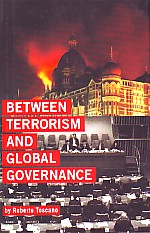
"Between terrorism and global governance" by Roberto Toscano


Roberto Toscano, the Italian Ambassador in New Delhi, has just published a thought-provoking book titled "Between terrorism and global governance : essays on ethics, violence and international law".

Here is a short excerpt from the preface of the book:

"The first chapters of this book revisit, through essays devoted to thinkers in the field of poolitical philosophy (from Machiavelli to Huntington), the tension between ethics and politics, trying to suggest that ethics is intrinsically tied to politics, and that moral awareness and realism are not in contradiction insofar as we move beyond individual ethics and address the issue of responsibility toward society and especially the rights and interests of others.
The second main focus of this book is terrorism, the vile and despicable form of conflict that targets innocent civilians.Both for terrorism and for other transnational threats and crises, from the present downturn to global warming, the nation-state, though still primarily responsible, cannot conceivably be adequate to the task.
This is why ethics and realist politics point in the same
direction: that of the need to recognize duties toward those who are not our fellow citiziens as well as limitation to a sovereignty that, while legitimate, cannot be used against both legal and moral norms."

Roberto Toscano. Between terrorism and global governance:
essays on ethics, violence and international law, Har-Anand Publications, New Delhi, 2009, pp. 112, USD 11.20 (Rs 250)

The book is available at the online bookstore http://www.dkagencies.com/

-------------------
Roberto Toscano is the Italian Ambassador in New Delhi and previously was Ambassador in Teheran. In the diplomatic carreer since 1969, he directed for several years the activities of the Policy Planning unit of the Italian Ministry of Foreign Affairs. He published several essays on the topics of human rights and of the ethics of international relationships. He taught International Relationships at LUISS University in Rome.
A complete list of his publications is available at http://www.robertotoscano.org

--------------
Stefano Baldi

Friday, July 24, 2009

Lorenzo Angeloni and the novel "In Darfur"

The novel, inspired to the humanitarian emergency in Darfur, portrays the story of Giorgio Respighi, a United Nations civil servant. Sent in mission to Khartoum, as peacekeeping expert, he works to analyze the tragic humanitarian situation in the Western region of Sudan. Witnessing the harsh local conditions and the helplessness of the international community, Respighi will be exposed to an unprecedented bildung, leading him to take extraordinary and grave decisions. The war emerges as the background of the novel, in its double nature of the crude reality of the developing world, as well as the object of the progressive political thought aiming at its eradication.

Lorenzo Angeloni, born in Perugia in 1958, is an Italian diplomat who served as Ambassador of Italy in Khartoum, Sudan, from 2003 to 2007. The book supports, through its purchase, the hospital “Salaam Centre” managed by the NGO Emergency.

MARCO DAVI'

Friday, April 17, 2009

Book on the Italian Embassy in the Hague by Gaetano Cortese

Gaetano Cortese, former Ambassador of Italy to the Netherlands, has published an illustrated book titled “The Embassy of Italy in the Hague (1907-2007)” dedicated to the historical Palace that hosts the Residence of the Italian Ambassador in the Hague. The book, which is available both in Italian and in Dutch, describes the history and main events of the Residence in the last century. The Book is filled with historical photos and prints that illustrate not only the beautiful building, but also the excellent relationship between Italy and the Netherlands which dates back to 1859.

Gaetano Cortese is also the author of another illustrated book on the Italian Embassy in Brussels, published in 2000 when he was Ambassador of Italy to Belgium.


Gaetano Cortese, L’Ambasciata d’Italia a l’Aia, Stabilimenti Tipografici Carlo Colombo, Roma, 2009. pp. 255. (Italian version)

De Ambassade van Italië in Den Haag (Dutch Version)

Monday, March 23, 2009

India in the XXI century


Italian former Ambassador in New Delhi analizes nowadays India with a look to its past but mainly focusing on the future perspective of the country. Colonial legacy, political equilibria, contrast between countryside and cities, the role of political parties and media and inter religious relations are all topics examined by Ambassador Armellini who served in India from 2004 to 2008.

Saturday, March 07, 2009

18 Ambassadress in Brussels


The «Association Femmes d’Europe» in Brussels has published a book titled book "18 Ambassadrices vous reçoivent à Bruxelles".
In this book eighteen Ambassadress in Brussels virtually open the doors to their residences and share some unusual anecdotes about the history of these exceptional buildings. They reveal the intimacy of the Embassies and talk about their lives as wives of diplomats. From the Gala dinner to the informal luncheon with friends, the Ambassadress take the reader by the hand through the backstage of their receptions: décor, tables, menus and details on their personal recipes from around the world.
The volume presents eighteen of the most prestigious Embassies in Brussels such as France, Italy, Switzerland, Spain, Argentina, Brazil, Egypt, Unites States, Indonesia, Spain, Korea, Monaco and many others. It is fully illustrated with insight pictures by Eric Stinglhamber,
Of the 5 000 copies printed, more than 3 000 were sold on a subscription basis prior to publication. This project, like all other projects of the non-profit organization, is aimed at raising funds for those in need in Europe and the Third World.

Bibliographic Reference:
Association Femmes d’Europe, 18 Ambassadrices vous reçoivent à Bruxelles, Editions Laconti, Bruxelles, 2008, pp. 190 (ISBN 9782870080412)