Sunday, June 06, 2010

Herman Portocarero, Belgian Diplomat and Novelist - All Demons' Day

The book All Demons' Day by Herman Portocarero rich in historical facts, is filled with intrigue, adventure, and suspense. Its narrative concentrates on the adventures of Rey, a pirate that sets ashore in San Cristóbal de La Habana, finding it afire with raucous music, dancing, and drunkenness. A free soul between the worlds of land and sea, Rey gets caught up in the yearly African carnival of Epiphany-All Demons' Day to soon become hunted by pirates and locals across the whole island.

Herman Portocarero, All Demons' Day: The Havana Pirate Manuscript, IUniverse, Bloomington, 2008. 

Herman Portocarero is a Belgian diplomat born in Antwerp of Spanish ancestry, with a distinguish career within the Belgian Ministry of Foreign Affairs. After joining the diplomatic corps, he served first in Addis Ababa, then in Kingston and La Havana. Nowadays he is Consul General of Belgium in New York. In 1978 Herman Portocarero debuted in the French novel La Combine the Karachi. His Dutch debut, The Anagram of the World, appeared six years later. Of note the trilogy of novels New York Nights (2006), Jamaican Nights ( 2007), Haitian Nights (2008).


Marco Davi'

Sunday, April 18, 2010

A successful novelist: the Indian diplomat Vikas Swarup


Vikas Swarup is one of the most famous Indian diplomat-writers, very well known for his two novels "Q & A" and "Six Suspects".
His first novel Q&A (published in 2005) is particularly famous because the film version of the book, titled ‘Slumdog Millionaire’, directed by Danny Boyle, has won more than 70 awards including four Golden Globes and 8 Oscars, including Best Adapted Screenplay and Best Picture. The novel has also been adapted for a stage musical and a radio play.
The book "Q&A" (already translated in 42 languages) opens in a jail cell in Mumbai, India, where Ram Mohammad Thomas is being held after correctly answering all twelve questions on India's biggest quiz show, Who Will Win a Billion? It is hard to believe that a poor orphan who has never read a newspaper or gone to school could win such a contest. But through a series of exhilarating tales Ram explains to his lawyer how episodes in his life gave him the answer to each question. Ram takes us on an amazing review of his own history -- from the day he was found as a baby in the clothes donation box of a Delhi church to his employment by a faded Bollywood star to his adventure with a security-crazed Australian army colonel to his career as an overly creative tour guide at the Taj Mahal.
The second novel "Six supects" (2008) is a multi layered story about crime and corruption in modern day India and it is based on true life events. Vivek 'Vicky' Rai, the playboy son of Cabinet Minister is dead, killed at his farmhouse at a party he had thrown to celebrate his acquittal. Six guests are discovered with guns in their possession - and each one is equally likely to have pulled the trigger. Who are these six suspects? And what were they doing in the farmhouse that night?
Vikas Swarup was born in Allahabad (India) in a family of lawyers. After his schooling, Vikas attended Allahabad University and studied History, Psychology and Philosophy. After graduating with distinction, he joined the Indian Foreign Service in 1986, motivated by an interest in international relations and a desire to explore different cultures. In his diplomatic career, Vikas has been posted to various countries such as Turkey (1987-1990), the United States (1993-1997) Ethiopia (1997-2000), the United Kingdom (2000-2003) and South Africa (2006-2009). Since August 2009, he is the Consul General of India in Osaka-Kobe, Japan. He has written for TIME, The Guardian, The Telegraph (UK), Outlook magazine (India) and Liberation (France). Apart from reading, he enjoys listening to music and playing cricket, tennis and table tennis.
Personal website: http://www.vikasswarup.net

Tuesday, December 22, 2009

The detective novels of Jean-François Parot

Jean-François Parot, French Ambassador in Guinea-Bissau, has recently published his 8th detective novel: “Le Noyé du Grand Canal”. Set in the second half of the 18th century, the series written by Parot follows the adventures of Nicolas Le Floch, policeman and aristocrat, the illegitimate son of the Marquis de Ranreuil. When the cycle of novels begins in 1761, he is working with the (real) Antoine de Sartine, Lieutenant General de Police of Paris, and promoted to Commissaire of the Châtelet. Each novel, painstakingly researched, frames the central intrigue within a carefully reconstructed historical setting. Particular attention is granted to linguistic accuracy and period detail and loving care is lavished on the Ancient Régime gastronomic landscape. As each case is linked to real political events, the protagonist, assisted by the Commissaire Bourdeau and flanked by an entertaining gallery of secondary characters, is witness to the stormy events leading to the Revolution.

Nicolas Le Floch – éditions Jean-Claude Lattès – Série Grands Détectives 10/18:
L’Enigme des Blancs-Manteaux (2001), L’Homme au ventre de plomb (2001), Le Fantôme de la Rue Royale (2002), L’Affaire Nicolas Le Floch (2003), Le Crime de l’Hôtel Saint-Florentin (2005), Le Sang des farines (2006), Le Cadavre anglais (2008), Le Noyé du Grand Canal (2009), L’Honneur de Sartine (expected Autumn 2010)

Jean-François Parot was born in 1946 and graduated in history and anthropology. He is a specialist of the 18th century. He was Vice-Consul in Kinshasa in 1974, Consul General in Saigon and Athens, Counsellor in Doha, Khartoum, Djibouti, Ouagadougou, Sofia and Minister in Tunis. He acted as adviser to the Minister for Industry and was named Associate Director of the Directorate for Military Cooperation and Defence in 2002. He is Ambassador in Guinea-Bissau since 2006.
His works have been translated into Italian, Spanish, English and Russian. They are the subject of a television adaptation on France 2 by Hugues Pagan with actor Jérôme Robart in the leading role of Commissaire Le Floch. (http://programmes.france2.fr/nicolas-le-floch/).

(by Clementina Osti)

Saturday, November 28, 2009

Murder in the Tower of Happiness, a novel by Egyptian Diplomat Tawfik


The latest novel by Mohamed Tawfik, who was until recently Egyptian ambassador to Australia, has recently appeared in English translation.
Following is a short excerpt:
"When the first armchair smashed into the asphalt, Sergeant Ashmouni was at his usual spot on the median of the Nile Corniche, trapped by the road’s twin currents turbulently flowing forth to Maadi and back to Old Cairo. He was wiping the sweat away from his eyes with his worn out sleeve-and in the process adding a new stain to his white traffic-police uniform-when surprise from the thunderous impact catapulted him into the fast lane of the side of the road closest to the Nile."

Thus opens this fast-paced city thriller laced with dry humor that takes us inside Borg al-Saada-’Tower of Happiness,’ one of the luxury high-rises planted like alien bodies amid the fields along the Nile south of Cairo-and inside the sordid lives and lavish lifestyles of its super-rich and famous denizens. The naked, strangled body of Ahlam, a beautiful young actress, is discovered in one of the elevators, and as the police investigation gets under way, we meet many of the tower’s strange characters: the owner’s agent, Kasib Bey, overweight, toupeed, and decked in gold chains; wealthy contractor Abd al-Tawab Mabruk Basha (Tutu Basha to his friends), insomniac since Ahlam’s murder; Abd al-Malak, a psychic with a Ph.D. in genetic engineering from MIT; Farah, his erstwhile sweetheart, who has become one of the very candy dolls she used to scorn; belly-dancer Lula Hamdi, who would be able to see Timbuktu if she stood on top of a pile of all her money; Madame Esmeralda, the society lady from Chile; and the homely Dr. Mahgub, somewhat less well off than his neighbors. And of course there is Antar-the naughty boy-who roams the tower, enters apartments, and overhears conversations, unsettling and exposing the decadent occupants and their relationships.

Until 2008 Mohamed M. Tawfik served as Egyptian Ambassador to Australia and non-resident Ambassador to New Zealand, Samoa, Fiji, Papua New Guinea and the Marshall Islands.
He has published in Arabic three volumes of short stories, The White
Butterflies, Till the Break of Dawn and Agamyste. An English translation of
selected stories from all three volumes was published in Egypt in 1997
entitled The Day the Moon Fell. He is, perhaps, best known for his two
novels; A Night in the Life of Abdel-Tawab Tutu, and A Naughty Boy Called
Antar. Together, the two novels form an epic work that follows Egypt’s
political and social evolution across the twentieth century. Translated into
English by the author, A Naughty Boy Called Antar was published by the
American University in Cairo Press in December 2008 with the title Murder in
the Tower of Happiness.

Sunday, October 04, 2009

"Du caviar dans les fraises", roman du diplomate français Bruno Clerc


Bruno Clerc, diplomate de carrière français, vient de publier un livre intitulé "Du caviar dans les fraises", de façon d'un roman d'espionnage.
Ce livre, qui s'inspire de la connaissance que l'auteur a acquise lors de ses séjours à Rome, se situe au cœur du monde diplomatique et ecclésiastique romain quelques années après l'effondrement du communisme. Un certain esprit humoristique semble se mêler au caractère fantasque des personnages, notamment du héros, Archibald, ancien diplomate sud-africain et calviniste, devenu catholique, prêtre et français, musicien et aquarelliste.
Depuis la Renaissance, les gardes suisses portent une fraise autour du cou. Quoique très inconfortable, cette collerette de dentelle empesée a traversé les siècles. Peu après la chute du mur de Berlin, on imagine l'effroi des plus hautes autorités de la Sainte Église catholique, apostolique et romaine, en découvrant que ces fraises-là pourraient avoir été assaisonnées d'un peu de caviar par les services secrets russes.

Bruno Clerc, Du Caviar Dans les Fraises, Benevent, Paris, 2009, 290 p. (Euro 20,50)

Bruno Clerc est né en 1958 et a commencé sa carrière diplomatique en 1979. Pendant les premières années, il est attaché d'ambassade en Italie et attaché culturel à Vancouver. Ensuite il choisit de revenir à Rome et entrer au séminaire: il étudie au séminaire français et suit des études de philosophie et de théologie à l'université pontificale grégorienne. Après deux ans, en 1984, il réintègre le ministère des Affaires étrangères à Paris. En 1991, il part au Kenya, devenant représentant permanent adjoint de la France auprès des Nations Unies à Nairobi. En 1994, il est nommé à Genève, à la Mission permanente de la France auprès des Nations Unies. Après un nouveau séjour à Paris, il est nommé Consul de France au Cap en 2001, puis Premier conseiller d'ambassade à Budapest en 2005. Depuis août 2008, Bruno Clerc est de retour à Paris.

Saturday, September 12, 2009

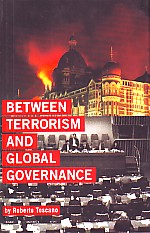
"Between terrorism and global governance" by Roberto Toscano


Roberto Toscano, the Italian Ambassador in New Delhi, has just published a thought-provoking book titled "Between terrorism and global governance : essays on ethics, violence and international law".

Here is a short excerpt from the preface of the book:

"The first chapters of this book revisit, through essays devoted to thinkers in the field of poolitical philosophy (from Machiavelli to Huntington), the tension between ethics and politics, trying to suggest that ethics is intrinsically tied to politics, and that moral awareness and realism are not in contradiction insofar as we move beyond individual ethics and address the issue of responsibility toward society and especially the rights and interests of others.
The second main focus of this book is terrorism, the vile and despicable form of conflict that targets innocent civilians.Both for terrorism and for other transnational threats and crises, from the present downturn to global warming, the nation-state, though still primarily responsible, cannot conceivably be adequate to the task.
This is why ethics and realist politics point in the same
direction: that of the need to recognize duties toward those who are not our fellow citiziens as well as limitation to a sovereignty that, while legitimate, cannot be used against both legal and moral norms."

Roberto Toscano. Between terrorism and global governance:
essays on ethics, violence and international law, Har-Anand Publications, New Delhi, 2009, pp. 112, USD 11.20 (Rs 250)

The book is available at the online bookstore http://www.dkagencies.com/

-------------------
Roberto Toscano is the Italian Ambassador in New Delhi and previously was Ambassador in Teheran. In the diplomatic carreer since 1969, he directed for several years the activities of the Policy Planning unit of the Italian Ministry of Foreign Affairs. He published several essays on the topics of human rights and of the ethics of international relationships. He taught International Relationships at LUISS University in Rome.
A complete list of his publications is available at http://www.robertotoscano.org

--------------
Stefano Baldi

Friday, July 24, 2009

Lorenzo Angeloni and the novel "In Darfur"

The novel, inspired to the humanitarian emergency in Darfur, portrays the story of Giorgio Respighi, a United Nations civil servant. Sent in mission to Khartoum, as peacekeeping expert, he works to analyze the tragic humanitarian situation in the Western region of Sudan. Witnessing the harsh local conditions and the helplessness of the international community, Respighi will be exposed to an unprecedented bildung, leading him to take extraordinary and grave decisions. The war emerges as the background of the novel, in its double nature of the crude reality of the developing world, as well as the object of the progressive political thought aiming at its eradication.

Lorenzo Angeloni, born in Perugia in 1958, is an Italian diplomat who served as Ambassador of Italy in Khartoum, Sudan, from 2003 to 2007. The book supports, through its purchase, the hospital “Salaam Centre” managed by the NGO Emergency.

MARCO DAVI'

Friday, April 17, 2009

Book on the Italian Embassy in the Hague by Gaetano Cortese

Gaetano Cortese, former Ambassador of Italy to the Netherlands, has published an illustrated book titled “The Embassy of Italy in the Hague (1907-2007)” dedicated to the historical Palace that hosts the Residence of the Italian Ambassador in the Hague. The book, which is available both in Italian and in Dutch, describes the history and main events of the Residence in the last century. The Book is filled with historical photos and prints that illustrate not only the beautiful building, but also the excellent relationship between Italy and the Netherlands which dates back to 1859.

Gaetano Cortese is also the author of another illustrated book on the Italian Embassy in Brussels, published in 2000 when he was Ambassador of Italy to Belgium.


Gaetano Cortese, L’Ambasciata d’Italia a l’Aia, Stabilimenti Tipografici Carlo Colombo, Roma, 2009. pp. 255. (Italian version)

De Ambassade van Italië in Den Haag (Dutch Version)

Monday, March 23, 2009

India in the XXI century


Italian former Ambassador in New Delhi analizes nowadays India with a look to its past but mainly focusing on the future perspective of the country. Colonial legacy, political equilibria, contrast between countryside and cities, the role of political parties and media and inter religious relations are all topics examined by Ambassador Armellini who served in India from 2004 to 2008.

Saturday, March 07, 2009

18 Ambassadress in Brussels


The «Association Femmes d’Europe» in Brussels has published a book titled book "18 Ambassadrices vous reçoivent à Bruxelles".
In this book eighteen Ambassadress in Brussels virtually open the doors to their residences and share some unusual anecdotes about the history of these exceptional buildings. They reveal the intimacy of the Embassies and talk about their lives as wives of diplomats. From the Gala dinner to the informal luncheon with friends, the Ambassadress take the reader by the hand through the backstage of their receptions: décor, tables, menus and details on their personal recipes from around the world.
The volume presents eighteen of the most prestigious Embassies in Brussels such as France, Italy, Switzerland, Spain, Argentina, Brazil, Egypt, Unites States, Indonesia, Spain, Korea, Monaco and many others. It is fully illustrated with insight pictures by Eric Stinglhamber,
Of the 5 000 copies printed, more than 3 000 were sold on a subscription basis prior to publication. This project, like all other projects of the non-profit organization, is aimed at raising funds for those in need in Europe and the Third World.

Bibliographic Reference:
Association Femmes d’Europe, 18 Ambassadrices vous reçoivent à Bruxelles, Editions Laconti, Bruxelles, 2008, pp. 190 (ISBN 9782870080412)

Friday, December 05, 2008

Diari di Manlio Brosio a Washington


Manlio Brosio (Torino, 10 luglio 1897-14 marzo 1980) ricoprì la carica di ambasciatore italiano negli Stati Uniti dal 1955 al 1961: oltre sei anni nei quali tenne un diario delle proprie giornate dense di impegni, incontri, impressioni e giudizi. Le sue pagine raccontano una stagione intensa da un punto di osservazione privilegiato. Uno sguardo in filigrana dalla capitale statunitense che permette di inserire le vicende italiane nel vivo del passaggio tra guerra fredda e distensione: la ricerca di uno spazio possibile per l'Italia costretta tra marginalità e ingerenza straniera, tra il rischio di rimanere esclusa dai circuiti decisionali e il pericolo di diventare terra di conquista per la superpotenza di riferimento.

Il volume di Washington dà inizio alla pubblicazione dei diari che Manlio Brosio ebbe l'abitudine di redigere nel corso della sua lunga e brillante carriera diplomatica: ambasciatore italiano a Mosca (1947-1951), Londra (1952-1954), Washington (1955-1961), Parigi (1961-1964) e segretario generale della NATO (1964-1971). Il piano generale dell'opera prevede l'edizione in quattro volumi di un'ampia selezione delle migliaia di pagine manoscritte.

Monday, November 03, 2008

Jacques Rial's Book on Publications of Swiss diplomats


Jacques Rial, a retired Swiss diplomat, has published (in French) the book titled "Le Bicorne et la Plume: Les publications de diplomates suisses de 1848 à nos jours", which contains all data concerning publications of Swiss diplomats since 1848.

It is an extensive research that the author has conducted consulting catalogues of the main Swiss libraries and that has led to some surprising discoveries. For each author, Rial has provided a short biography of each author and the list of publications (both books and short essays). The book covers the editorial activities of 233 Swiss diplomats, with around 2000 bibliographical entries.

This book is included in the series "Diplomats as writers" by Diplofoundation. The first book has been "Through the Diplomatic Looking Glass", by S. Baldi and P. Baldocci, concerning books written by Italian diplomats.
Similar research has now been announced in other countries, especially in Latin America.

Jacques Rial was born in 1932 and Graduated in Literature in Geneva. From 1962-1967 he was a member of the UN Civil Operation in Congo. Rial enters the Swiss diplomacy in 1967 as head of Information in the Development Cooperation.
Secretary General of the Swiss Commission for UNESCO (1970-76). He has served in London and in The Hague. Ambassador in Yaoundé (1983), Montevideo (1988) and Zagreb (1992). Ambassador in charge for migration issues in Berne (1993).


Jacques Rial, Le Bicorne et la Plume: Les publications de diplomates suisses de 1848 à nos jours. (preface by Bénédict de Tscharner)
2008, Graduate Institute of International and Development Studies and DiploFoundation
Paperback, 240 pages. ISBN: 978-99932-53-19-8
Price: 20 Euros

For more information or to order this publication you can visit the Diplo Publications website:
(http://www.diplomacy.edu/Publications/display.asp?Topic=Books/LeBicorne)

Friday, October 31, 2008

Politica e diplomazia in Italia tra XIX e XX secolo. Vita di Antonino di San Giuliano (1952-1914)


dal sito dell'editore:

Antonino di San Giuliano è in fondo un personaggio poco noto in Italia. Gli stessi storici hanno dedicato relativamente poche attenzioni alla vita e all’attività di questo statista siciliano.
Del resto, si è ritenuto che San Giuliano sia stato il mero esecutore di una politica estera voluta da altri: il re Vittorio Emanuele III e i diversi presidenti del Consiglio che si avvicendarono alla guida del paese all’inizio del Novecento, in particolare Giolitti. In realtà, pur restando nell’alveo di direttrici ben collaudate di politica estera, San Giuliano si assunse l’onere di importanti decisioni e dettò i tempi, anche a Giolitti, di rilevanti azioni: si pensi alla guerra di Libia. Fu poi San Giuliano che gettò le basi fondamentali del Patto di Londra, ovvero dello strumento diplomatico che conteneva le modalità secondo cui l’Italia sarebbe dovuta entrare nella prima guerra mondiale per uscirne da grande potenza. Egli lasciò a Salandra e Sonnino lo schema di un Patto che, a suo giudizio, avrebbe dovuto tendere però non tanto ad assicurare all’Italia vasti territori fuori dei suoi confini geografici, quanto piuttosto a darle la sicurezza di condurre una guerra la meno gravosa possibile. Questa biografia si propone dunque di far riscoprire a studiosi e appassionati di storia un personaggio complesso, che mosse i suoi primi passi nella politica locale a Catania, durante la seconda metà dell’Ottocento,e terminò la sua non lunga vita alla guida del ministero degli Esteri, quando l’Italia era tutta concentrata a sciogliere il dilemma se restare neutrale o intervenire nella Grande Guerra.

(2007) pp. 1016

ISBN: 978-88-498-1697-6

€. 45,00

Thursday, August 28, 2008

"Turkey decoded" by the Swedish diplomat Ann Dismorr


The Swedish diplomat Ann Dismorr has published an interesting book titled “Turkey Decoded” (Saqi Books, 2008, pp. 184). She was the Swedish Ambassador to Turkey from 2001 to 2005. In this period the prospect of EU membership helped Turkish governments to achieve substantial democratic reforms which led to the start of accession negotiations with Brussels in October 2005. In her book she examines the implications of Turkey's affiliation with Europe and its role in the Middle East against the broader concerns of the widening gap between the West and the Muslim world, terrorism, and the struggle for human rights and democratization.
The concluding sentences of the book seem to summarize its main argument: "President [Abdullah] Gül and the AK Party government face a historic challenge to demonstrate that Islam and democracy are compatible. Turkey has come a long way in proving that.… The EU is facing a historic choice of how to deal with Turkey -- the most liberal and well-developed democracy in the Muslim world of 1.2 billion people. The world is watching."

Ambassador Ann Dismorr is Head of the International Department of the Swedish Parliament. She has served as a diplomat with the Swedish Ministry for Foreign Affairs for over 25 years. She was Ambassador of Sweden to Turkey from 2001-2005. She has also lived in Saudi Arabia and served as Ambassador of Sweden to Lebanon and Azerbaijan.
She was Private Secretary to the Swedish Foreign Minister in 1992-3 during the final stages of Sweden's EU accession.
From 1995-9 she was human rights expert at the Swedish mission to the UN.
She has an academic background in political science from Stockholm University, Gothenburg University and Yale University.

Tuesday, August 12, 2008

Gharekhan and "The Horseshoe Table"


Chinmaya Gharekhan, former Permanent Representative of India to the UN is the author of the book 'The Horseshoe Table: An Inside View of the UN Security Council' (Pearson Longman, 2006, pp. 328). The book provides an inside view of the functioning of the United Nations Security Council which is a vital instrument at the service of the international community but over which the same international community has hardly any control. In this unique, unprecedented and intimate account, Chinmaya Gharekhan takes the reader through the meetings of the Security Council as it debated such issues as emergency situations during the first Gulf War; Iraq's WMD programme and the work of the special commission set up to eliminate them; the beginnings of the Oil-for-Food programme; the Balkan War of the early 1990s; the Rwanda Genocide, and the Lockerbie disaster involving Libya.

Chinmaya Gharekhan is a former Indian diplomat who served in Egypt, the Congo, Laos, Vietnam, and former Yugoslavia. He has has been posted several times to the Permanent Mission of India to the United Nations. Later as Permanent Representative to the United Nations Office and the Specialised Agencies in Geneva, and lastly as India's Ambassador/Permanent Representative to the United Nations in New York for over six years.

Saturday, July 26, 2008

Book on Diplomacy as teamwork. Italy's experience with Amb. Fulci.

There is probably only one book which contains contributions of 13 diplomats from the same country. It is the Italian book “Italy at the UN. 1993-1999. The years with Paolo Fulci. Diplomacy as a teamwork” (Rubbettino Editore, 2007), available only in Italian and edited by Ranieri Tallarigo (another Italian diplomat).
All the authors have been working with Ambassador Francesco Paolo Fulci while he was the Permanent Representative at the United Nations in New York. The five years described in the book have been very important for Italian diplomacy.
The contributions in the book, full of anecdotes and events, constitute an insider view of multilateral work. Multilateral diplomacy, like other diplomacies, is not an exact science. Nevertheless there are models and best practices that can be developed on the basis of experience. But an important element for success is leadership: from the writings of his collaborators it is clear that Ambassador Fulci was a leader who clearly indicated not only the objectives, but also the methods to achieve them.
Most of the collaborators of Ambassador Fulci are now Italian Ambassadors and it is most probable that they are still putting into practice all the teachings that they received during the Fulci’s years in New York.
The book could be considered a kind of handbook on leadership, teamwork and diplomacy based on a concrete experience in a multilateral diplomatic mission.

TALLARIGO, Ranieri (editor). L' Italia all'ONU 1993-1999. Gli anni con Paolo Fulci: quando la diplomazia fa gioco di squadra [Italy at the UN 1993-1999. The Years with Paolo Fulci. Diplomacy as a Teamwork], Rubbettino, Soveria Mannelli (Cz), 2007, pp. 112. (available at http://www.ibs.it)

Friday, April 11, 2008

Adrian de Hoog: Canadian diplomat and writer


Adrian de Hoog, former Canadian diplomat with a thirty year career, has written two books: The Berlin Assignment (2006) and Borderless Deceit (2007).

His Novels

It is the turbulent Berlin of the early 1990s which provides the backdrop for de Hoog's first novel, The Berlin Assignment. It is a tale of political intrigue: not long after the fall of the Berlin Wall, with a new order in full swing, Canada’s new consul Anthony Hanbury arrives to assume his diplomatic duties. He quickly develops contacts, makes friends, and rises in Berlin society. But is his progress as innocent as it seems? Cold War spies still active in the city assemble a dossier, and the suspicions which accumulate soon threaten to destroy the consul.

Adrian de Hoog’s second novel, Borderless Deceit, is more international still. The intrigue spills effortlessly across borders; individual privacy is in short supply. A virus destroys the communication network of the Canadian diplomatic service. Implicated in the investigation are Carson Pryce, a reclusive, moody intelligence analyst, and Rachel Dunn, a brilliant diplomat with a glowing humanitarian track record. Carson for years has been secretly obsessed with Rachel and abuses his privileged access to intelligence information to keep track of Rachel and people around her. He knows things about Rachel which she doesn’t herself. The investigation into the virus deepens and Carson initiates a cover-up to prevent damage to Rachel’s reputation. As events begin to spiral out of control, both are suddenly forced to go into hiding. After separate, roundabout journeys they end up in an isolated villa in Costa Rica.

Adrian de Hoog was born in the Netherlands but he emigrated with his family to Canada (Brandon, Manitoba) in 1957.
He was educated in the universities of Manitoba, Saskatchewan and Oxford and he obtained a D.Phil from the latter in 1974 (in the History and Philosophy of Science). That same year he joined the Canadian Foreign Service.
During his thirty year career working as a diplomat for Canada, he had postings in countries as varied as Kenya and Germany and at various stages of his career contributed to Canada's international interest by working on issues such as development assistance, nuclear non-proliferation, the global environment, and international economic topics pursued in for a such as the OECD and the G 7.
As Canada's Consul-General in Berlin shortly after the Berlin wall came down he witnessed the enormous social, political, economic and cultural changes sweeping over a city which was always restless and a center of change.
De Hoog retired from Foreign Service in 2004 and is now pursuing a career as writer. He lives in Ottawa.

http://www.adriandehoog.com


(Simona Gryllos)

Thursday, March 27, 2008

Books written by Greek Diplomats

In 2002 The Ministry of Foreign Affairs of Greece has published a book (available only in Greek language) entitled: “Diplomacy and Authorship”.

For the first time the Ministry has put together a comprehensive catalogue of the books written by Greek diplomats, including those volumes that do not deal with diplomatic affairs.

The initiative came from Ambassador Adamantios Vasilakis when he was Head of the Centre for Analysis and Planning of the Ministry. Vasilakis not only took the initiative but also actively participated in the whole layout of the book.

In the book, diplomats are listed in alphabetical order; for each of them some basic biographical information and a photo are provided. This description is followed by a list of their writings classified by subject (International Relations, Law, Literature, History etc.).

Moreover, the comprehensive and well illustrated publication contains further useful data concerning Greek diplomats’ writings such as a list of the reprints, a list of awarded books and a useful list of abbreviations and acronyms.

Among famous Greek diplomat-writers included, one can find George Seferis (alias Georgios Seferiadis), who won the Nobel Prize in literature in 1963 for his lyric poetry.

The idea behind this book is similar to the one used in a recently published research (available in English language) by Diplofoundation and the Italian Ministry of Foreign Affairs concerning books written by Italian diplomats (Through the Diplomatic Looking Glass -
http://baldi.diplomacy.edu/italy/diplomaticglass.htm).

A Catalogue of books written by Swiss diplomats is currently being compiled by Amb. Jacques Rial. The draft of this work is available at the webpage:
http://www.diplomacy.edu/Publications/display.asp?Topic=Writers-Swiss

Monday, March 10, 2008

Amedeo Guillet and his Private War


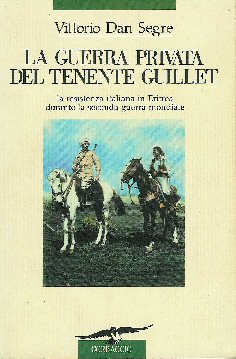
The book by Vittorio Dan Segre entitled “La guerra privata del tenente Guillet. La resistenza italiana in Eritrea durante la seconda guerra mondiale” [The Private War of Tenent Guillet] (Tea, Milano, 1997) is an interesting biography of an Italian legend, military officer and diplomat, written by another eclectic figure, who parted his life between the Israeli diplomatic and intelligence services and the academic career.

The book (in Italian) is about the exceptional life of Amedeo Guillet, a former officer of the Italian Army. Descendant from a noble family from Piedmont, born in Piacenza in 1909, he graduated from the Academy of Infantry and Cavalry of Modena in 1930. An excellent horseman, Guillet was selected for the Italian Olympic equestrian team and was due to compete in the Berlin 1936 Olympics. Instead, he participated to the Italian conquest of Ethiopia in 1935 and volunteered during the Spanish Civil War, returning to East Africa in the aftermath if World War II.

During the war, Viceroy Amedeo, Duke of Aosta, gave Tenant Guillet command of the 2,500 strong Gruppo Bande Amhara, made up of recruits from throughout Italian East Africa. Guillet’s most important battle happened towards the end of January 1941 at Cherù when he decided to attack enemy armored units. At dawn he charged a column of tanks armed only with swords, guns and hand grenades. This was the last cavalry charge the British faced and one of the last in the history of cavalry.

After the Italian surrender in East Africa in 1941, Guillet began a private war against the British, faithful until death to the oath to the House of Savoy, with the nickname of “Devil Commander”. He was famous during the Italian guerrilla war in Ethiopia in 1942 because of his courage and ability to obtain the support of the local population - thanks to his knowledge of Arabic and Islamic civilization - in order to avoid being captured by the British Intelligence. Guillet was finally able to reach neutral Northern Yemen, where he trained soldiers and cavalrymen for the Imam’s army. He finally returned to Italy a few days before the armistice, embarking incognito on a Red Cross ship.

After Italy’s surrender, Guillet was promoted to Major for his war accomplishments and was assigned to the Military Intelligence. In this role, he worked closely with an official of the British services, Vittorio Dan Segre, who later became his close friend and biographer.

Following the war Guillet entered the Italian diplomatic service where he represented Italy in Egypt, Yemen, Jordan, Morocco, and finally as ambassador to India until 1975. In 1971, he was in Morocco during an assassination attempt on the King.

On 4 November 2000, the Italian Armed Forces Day, Guillet was presented with the Knight Grand Cross of the Military Order of Italy (the highest military decoration in Italy) by President Carlo Azeglio Ciampi.

Vittorio Dan Segre, born in Italy in 1922, emigrated to Palestine in 1938. He worked for the British Intelligence during WWII. He met Amedeo Guillet in Naples in 1944, after having read the intelligence files about the “Devil Commander” and the Italian guerrilla in Abyssinia. After a brief period in the diplomatic service of Israel, he pursued the academic career, teaching at the University of Haifa and then at Oxford University, MIT, and Stanford University.

(Marco Davi')

Sunday, February 24, 2008

Emil Kazakov and Bulgarian Geopolitics


The Bulgarian diplomat Emil Kazakov has recently published a book titled The Bulgarian Geopolitics in 20th Century: A National, European and Global View, Faber, 2007, 252 p. (The book is in Bulgarian); Preface by Prof. Beatrice Giblin.
It is an original study of the geopolitical permanencies (perceptions and material factors) that have shaped Bulgarian politics from the end of Ottoman rule in 1878 until the end of the post-communist period in 1997-2000.
The first part of the book is dedicated to the historical and geopolitical conditions that have contributed towards the formation of the individual identity of Bulgarian politics: the three wars in 1913, 1919 and 1947; the Macedonian Question and the formation of a territorial perception of national unity.
The second part investigates the specifics of contemporary Bulgarian politics "inherited" from the national geopolitical pattern. The third part concerns the different perceptions of the Bulgarian geopolitical position and their impact on the decision making process. The final part analyzes the influence of the global geopolitical ideas over Bulgaria's position as a NATO and EU member and defends the need of a pragmatic approach towards the formulation of Bulgarian politics.

Emil Kazakov has a PhD in geopolitics and is an expert in external relations. He was born in Varna, Bulgaria in 1960 and has been posted in Paris and he is currently at the Permanent Mission of Bulgaria to the European Union in Brussels.