Friday, December 28, 2007

Robert Cooper and "The Breaking of Nations"


Robert Cooper, The Breaking of Nations. Order and Chaos in the Twenty-first century, Atlantic Monthly Press, New York, 2003.

Albeit this is not a most recent publication, it nonetheless deserves to be considered for its sweeping interpretation of today’s global predicament. In this small book of essays Robert Cooper argues that two revolutionary forces are transforming international relations: the breakdown of state control over violence, reflected in the growing ability of tiny private groups to wield weapons of mass destruction, and the rise of a stable, peaceful order in Europe that is not based on either the balance of power or the sovereignty of independent states. In this scheme, the Westphalian system of nation-states and power politics is being undermined on both sides: by a postmodern Europe and a premodern world of failed states and post-imperial chaos. Furthermore, Cooper explores how the West should cope with the encroachment of premodern violence. The American approach to such threats is hegemonic. The European Union, meanwhile, aims to expand outward to absorb threatening societies on its periphery. In Cooper’s view, neither approach is sustainable, and he seeks a synthesis that would allow the United States and Europe to confront threats together over the long haul.

Robert Francis Cooper was a British diplomat until 2002 when he assumed the role of Director-General of the Directorate-General E - External Economic Relations, Politico-Military Affairs at the General Secretariat of the Council of the European Union.
Born in 1947, he joined the Diplomatic Service of the Foreign and Commonwealth Office in 1970. As a diplomat, he has worked at various British Embassies abroad, notably those in Tokyo and Bonn. At the Foreign Office, he was Head of the Policy Planning Staff from 1989 to 1993. He was the UK’s Special Representative in Afghanistan until mid-2002. Since 2007 he has been a member of the European Council on Foreign Relations.

In 2004, Cooper was awarded the Orwell Prize for The Breaking of Nations.

(Marco Davi')

Sunday, December 16, 2007

French Diplomat Defarges' s book on geopolitics


The French diplomat Philippe Moreau Defarges has published Introduction à la géopolitique (Collection, Points du Seuil, 2nd ed., 2005). As the title already reveals the aim of the book is to introduce the reader to geopolitical thinking. The author provides clear definitions and historical examples, which demonstrate the importance of geopolitics. Moreau Defarges offers an introduction to the geopolitical dimension of the great international issues such as war, international trade or international organisations. The book outlines the importance of geopolitical reasoning, the close link between spatial and political realities and how the geopolitical reality determines inequalities between states, which cannot be ignored.

Philippe Moreau Defarges, Minister Plenipotentiary, is also the co-director of the RAMSES report at the Institut français des relations internationals (IFRI) and professor at Science-Po. He is the author of several publications on international relations and geopolitical issues. These publications include Relations Internationales, Tome 1: Questions Régionales (Poche, 2003), Relations Internationales, Tome 2: Questions Mondiales (Poche, 2007) and Les Institutions Européennes (Broché, 2005).

Saturday, December 01, 2007

Valija diplomatica – Books published by Spanish Diplomats

Spain has a specific series of books exclusively dedicated to titles published whose author is a Spanish diplomat. The series is called “La valija diplomatica” [diplomatic bag] by Editorial Dossoles of Burgos (http://www.dossoles.es/). The series is directed by Amb. Alonso Álvarez de Toledo and includes some twenty titles written by different Spanish diplomats.
The books vary form International Affairs (Viaje Real a Grecia by Javier Jiménez-Ugarte) to Memoirs (Episodios de un Diplomático by Jaime de Piniés y Rubio), from Novels (La Cumbre by Jorge Fuentes) to Poetry (Rimas en claro. Primera Antología de Poetas Diplomáticos (s.XX)), from Culture (La Magia del Teatro by Enrique Llovet) to history (Las Depuraciones de la Carrera Diplomática Española
(1931-1980) by José Luis Pérez Ruiz).
This series is published under the auspices of the Association of Spanish Diplomats (ADE) which supports it through specific subscriptions of its members.
More titles of books published by Spanish diplomats are also available on the site of the Ministry of Foreign Affairs and Cooperation of Spain (Ministerio de Asuntos Exteriores y de Cooperacción) at the page:
http://www.mae.es/es/MenuPpal/Actualidad/Publicaciones+de+la+D.G.C.E/bibliografia_diplomatica1.htm

Monday, November 19, 2007

Book on Peacebuilding by the Italian diplomat Alberto Cutillo

The Italian Diplomat Alberto Cutillo has published an interesting and original book (in English) on Peacebuilding with the title: “Reviewing Fifteen Years of Peacebuilding. Past, Present and Future of International Assistance to Countries Emerging from Conflicts and Italy's Contribution”.
The book traces the evolution of Peacebuilding activities since the early 1990s and sheds light in those areas thatrequire further attention. In spite of the considerable efforts and resources invested in years of practice,Peacebuilding activities throughout the 1990s were undertaken by a multitude of actors in absence of an overall political strategy. The main challenges of Peacebuilding are therefore not due to lack of knowledge or lessons learned;instead, they are due to the failure to produce a commonly agreed doctrine and to translate it into meaningful guidelines on the ground. The book further argues that although progress is being made, the United Nations system and donor agencies have failed thus far to address satisfactorily three main gaps: political leadership,strategic coordination and a comprehensive mechanism.

Note that a Free Online PDF version of the book is available at: http://www.ssi.unitn.it/working_papers/index.htm

Bibliographic data:
Cutillo Alberto, Reviewing Fifteen Years of Peacebuilding.Past, Present and Future of International Assistance toCountries Emerging from Conflicts and Italy's Contribution,Universita' di Trento, Scuola di Studi Internazionali,Working Paper 01/2007, Trento, 2007, pp.139

Tuesday, November 13, 2007

The European Union and the Western Balkans


Luca Gori, Italian diplomat, is the author of a book on the European Union policies towards the Western Balkans countries in the years 1996 - 2007. Gori who has served at the Italian EU mission in Bruxelles analizes the action taken by the Union and its efforts to integrate the region in the European framework. A very interesting book for anyone who also wants to understand the current situation.


The book is available at: http://www.libreriauniversitaria.it/

Sunday, November 11, 2007

Book on French Diplomat Paul Morand


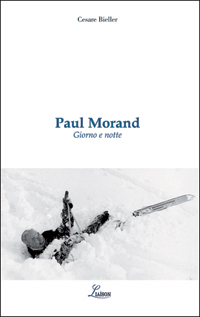
A young Italian diplomat, Cesare Bieller, has recently published a book (in Italian) on the famous French Diplomat Paul Morand.

Paul Morand ( 1888 - 1976) was a French diplomat who excelled in writing novels. His books were noted in the Twenties for their elegant and concise narrative style, and for the author's insightful observations of the many countries he visited. Morand's reputation has been marred by his political stance during the Second War War, when he collaborated with the Vichy Regime. After the war he lived in exile in Switzerland and wrote more profound texts.

Paul Morand's books, be they his travel narratives or his moralistic works, are extraordinarily relevant today. Cesare Bieller reveals to us a few of the many facets of this modern and contradictory writer who loved Italy so much that he named his Memoirs, "Venices". It is a journey into the universe of a writer who, although misunderstood during his lifetime, remains compelling to this day.

Here are the bibliographic data:
Bieller Cesare, Paul Morand. Giorno e notte, Liaison editrice, Courmayeur, 2007, pp.79.
The book is available at http://www.ibs.it

Monday, November 05, 2007

Intercultural Communication between Greeks and Italiana


Fabrizio Lobasso, Italian diplomat and former Consul in Athens, is the author with two researchers from University Ca' Foscari of Venice of an interesting book on intercultural communication between Italians and Greeks.

The book is addressed to professionals working in the fields of business, tourism and culture.

The project has been financed by the Italian Foreign Ministry.

Saturday, November 03, 2007

Book on Asian Diplomacy by Kishan Rana

The last book published by a former Indian diplomat, Kishan Rana, is titled "Asian diplomacies. The foreign ministries of China, Japan, Singapore & Thailand" (Diplo, 2007, pp.246).
The book contains information and unique data on the structures, operation and the working style of the foreign ministries of the five key countries in Asia, mentioned in the title. The book offers a comparative examination of the performance of these foreign ministries together with new insight into the countries covered, as also for its examination of the cultural dimension of the diplomatic process.
A brief quote from the Introduction: "World Affairs are more fluid than before and therefore demand greater attention. Diplomacy is globalised. One consequence is that almost all foreign ministries are reorganizing themselves, and fine tuning their diplomatic machinery to deliver improved performance. Such MFA adaptation-transformation-reform is a recurring theme in this study."
Further information on the book and order form for the book are available at the page http://www.diplomacy.edu/Books/publications.asp

Tuesday, September 25, 2007

Storie diplomatiche brevi e leggere di Ranieri Tallarigo

Segnalo la recente pubblicazione delle memorie dell'Ambasciatore Ranieri TALLARIGO, Storie Diplomatiche, (pagg 112, euro 12) edito dalla casa editrice Rubbettino nell'ambito della collana Studi diplomatici. Una carrellata di ricordi, non sempre legati a grandi avvenimenti, che narrano la vita di un diplomatico.

Sunday, April 29, 2007

F. Springer: Dutch diplomat and writer


The Dutch Diplomat Carel Jan Schneider has published several novels under the pseudonym of F. Springer. He has been posted in New Guinea, New York, Bangkok, Brussels, Dhaka and Tehran. He was the Netherlands ambassador to Angola and the former GDR

He was born in 1932 in Batavia (today Jakarta) in the former Dutch East Indies.

His stories are often located in places where he has served. This is the case, for example, of Teheran, een zwanezang (Teheran, A Swan Song, 1991), considered as one of his best novels.

His book Bougainville, which has been translated in many languages, is the story of a diplomat confronted with the psychological effects of his old friend's death. The bookhas received the Ferdinand Bordewijk award in 1982. He has also received the Constantijn Huygens award for his entire work in 1995

Saturday, February 24, 2007

Where diplomacy meets art


Ugo Colombo Sacco di Albiano, an Italian diplomat, has published an interesting and original book on the history of the buildings that have housed the Italian Ministry of Foreign Affairs. Using the words of the author "For the first time, this book presents to the eyes of the general public the interiors of the state receptions rooms in the successive historical buildings of the mother house of Italian diplomacy: Palazzo delle Segreterie di Stato in Turin; Palazzo Vecchio in Florence; Palazzo della Consulta, Palazzo Chigi, the Farnesina, and Villa Madama in Rome."

The book is in Italian, but an illustrated brochure of the book in English can be consulted here.

Saturday, January 27, 2007

Discorso ai volontari diplomatici del 1932

Come era la carriera diplomatica negli anni trenta? E quali erano le aspettative del Capo del governo nei confronti dei giovani diplomatici? Leggendo il discorso pronunciato da Benito Mussolini, Capo del Governo, ai volontari diplomatici del 1932, si notera' che molti dei principi sono validi ancora oggi.

Thursday, August 03, 2006

La violenza, Le regole - Un nuovo libro di Roberto Toscano

Dopo il bellissimo libro "Il volto del nemico" (Guerini, 2000), Roberto Toscano torna a rivisitare i principi che regolano la politica internazionale e che sono alla base della convivenza pacifica con il suo volume "La violenza, le regole" (Einaudi, 2006). Ancor una volta ci troviamo di fronte ad un libro che non fornisce tutte le risposte, ma stimola il lettore a pensare al di fuori degli schemi. La violenza ed il terrorismo sono i temi che vengono analizzati nel libro. Il quadro che si profila e' inquietante, ma non per questo l'autore si lascia andare ad un facile catastrofismo. Vengono invece evidenziati e sottolineati tutti quei passi in avanti (come la Corte Penale internazionale) che, seppur faticosamente e con qualche incertezza, la comunita' internazionale e' riuscita a compiere negli anni recenti.

Saturday, June 17, 2006

Nuovo libro di Maurizio Serra

E' stato pubblicato per le Edizioni Settecamini, il nuovo libro di Maurizio Serra dal titolo "Fratelli separati. Drieu-Aragon-Malraux". Il libro ripercorre le vicende dei tre intellettuali francesi. Drieu, letterato borghese che l’odio per la borghesia trasformò in fascista romantico e autodistruttivo. Aragon, l’avanguardista approdato al comunismo e tornato in tarda età all’ispirazione libertaria. Malraux, il rivoluzionario divenuto campione e ministro dell’ordine conservatore, ma rimasto fino all’ultimo avventuriero e mitomane.

Tuesday, January 17, 2006

La Caduta dello Scia'. Diario dell'Ambasciatore italiano a Teheran (1978-1980)


Giulio Tamagnini è stato Ambasciatore d'Italia a Teheran dall'otto gennaio 1978 al 30 giugno 1980. Egli ha quindi assistito non solamente alla caduta del regime dello Scia` di Persia, ma anche allo scoppio della rivoluzione, al ritorno dell'Ayatollah Khomeini, alla nascita della Repubblica islamica ed, infine, alla triste vicenda della cattura dell'ambasciata americana e della presa in ostaggio del personale diplomatico. Come chiarisce lo stesso autore nella sua introduzione, nel libro egli si astiene da ogni giudizio sulla Repubblica islamica che ha visto nascere e vuole fornire solamente una testimonianza del difficile travaglio con cui la Repubblica islamica è venuta alla luce. Il diario è quindi molto sintetico e fattuale. Non cerca di spiegare gli eventi, ma di raccontare come furono vissuti dal punto di vista dell'Ambasciatore d'Italia e della numerosissima comunità italiana residente in Iran. Per quanto scritto dunque con il distacco che si conviene ad un diplomatico che cerca sempre di mantenere sangue freddo e lucidità anche nei frangenti più difficili, per il lettore il racconto di quei drammatici avvenimenti risulta assai vivace ed emozionante.

Dalla lettura emerge in primo luogo come la diplomazia
italiana avesse per tempo espresso tutti e riserve sulla
tenuta del regime dello Scia` a causa dei suoi evidenti limiti
di autoritarismo, mancanza di democrazia, sbagliata politica
ed economica ed insufficiente rispetto per i diritti umani.

La velocità con cui il regime crollò risultò tuttavia
sorprendente ed il diario dell'Ambasciatore descrive quindi
tutto il lavoro diplomatico di difesa degli interessi e dei
cittadini italiani. Prima della rivoluzione vivevano in Iran
circa 15,000 italiani impegnati in grandi opere
infrastrutturali come, ad esempio, il porto di Bandar Abbas o
la diga di Lar (Damavand). L'integrazione di questa
consistente comunità con la popolazione iraniana era ottima e
rivelava anzi una forte affinità culturale e simpatia tra i
due popoli. Forse anche per questo capitale di reciproca
simpatia, la comunità italiana fu coinvolta solo marginalmente
negli scontri prodotti dalla rivoluzione. La rivoluzione
provocò comunque l'arresto delle attività economiche, enormi
difficoltà contrattuali, vari incidenti ed infiniti interventi
di tutela consolare dei nostri concittadini. Quando la vita
quotidiana cominciò a farsi veramente difficile, l'Ambasciata
iniziò a consigliare il rientro delle famiglie in Italia e la
comunità fu progressivamente fatta evacuata. Inizialmente
bastò aumentare la capacità degli ordinari voli Alitalia, ma
con lo scoppio della rivoluzione vera è propria, l'evacuazione
fu condotta dalla centrale operativa allestita in Ambasciata
grazie ai C 130 dell'Aeronautica Militare Italiana, operanti
dal Kuwait e dalla Turchia sotto il coordinamento dell' allora
Colonnello Arpino (il futuro comandante italiano
nell'operazione Desert Strom per la liberazione del Kuwait nel
1991).

Il diario dell'Ambasciatore rende quindi conto di tutto il
lavorio diplomatico teso alla liberazione degli ostaggi
americani catturati nella presa dell'Ambasciata statunitense
il quattro novembre 1979. Mentre il precedente attacco degli
"studenti" iraniani all'Ambasciata americana (quello del 14
febbraio 1979) emerge dal diario direttamente dal racconto
dell'Ambasciatore americano Sullivan, l'occupazione di
novembre ed il fermo dell'incaricato d'affari americano
Laingen al Ministero degli Esteri viene ricostruito a poco a
poco dai diplomatici dei vari Paesi in servizio a Teheran. Il
primo gennaio 1980 l'Italia assume la presidenza di turno di
quella che era ancora la comunità economica europea "a nove" e
l'Ambasciatore Tamagnini si quindi trova a compiere in prima
persona numerosi passi e colloqui con gli interlocutori
iraniani: i vari ministri degli esteri via via succedutisi
(Yadzi, Bani Sadr, Ghotbzadeh). Più volte convocato a Roma per
consultazioni, nel suo diario Tamagnini riferisce dei vari
colloqui con il Presidente della Repubblica Pertini, con i
Presidenti del Consiglio Andreotti e Cossiga, con i Ministri
degli Esteri Forlani, Ruffini e Colombo nonche`con una serie
di colleghi diplomatici destinati a carriere prestigiose e
brillanti. Dalle pagine del diario tra i collaboratori di
Tamagnini a Teheran spuntano i nomi di Bondioli Osio - futuro
Ambasciatore in Qatar, capo dell'Ufficio per il recupero delle
opere d'arte italiane rubate nel mondo e recentemente
responsabile per il recupero del museo archeologico di
Baghdad, dopo la caduta di Saddam Hussein - e De Ceglie
-futuro Ambasciatore in Pakistan e presso le Nazioni Unite a
Vienna-. Tra gli interlocutori a Roma: Renato Ruggiero -
futuro Segretario Generale e Ministro degli Esteri -, un
giovane Giuseppe Baldocci - futuro Ambasciatore a Teheran e
Segretario Generale-, Umberto Vattani - futuro Ambasciatore a
Bonn ed a Bruxelles, nonche` anche lui Segretario Generale -
ecc..

Benche` Tamagnini tenga a dire di non voler dare valutazioni
politiche, dai diari emerge comunque un'indicazione che appare
oggi in parte profetica. Egli scrive infatti che, a fronte
delle difficoltà non solo politiche, ma anche culturali nei
rapporti tra Iran e Stati Uniti e` "ai paesi europei, ed in
particolare all'Italia" che "compete un ruolo in a difesa e
nell'interesse dell'Occidente in un Paese come l'Iran". Sono
parole scritte nel 1979 in piena rivoluzione e pubblicate nel
1990, quando il " dialogo di civiltà" promosso dal Presidente
Khatami era ancora ben al di là da venire. Queste parole
restano infondo valide ancora oggi nonostante il fatto che -
chiusa ormai l'era Khatami - i problemi contingenti sembrano
ancora una volta impedire ogni possibile visione di lungo
periodo.

Dati bibliografici:
TAMAGNINI Giulio, La caduta dello Scià. Diario dell'Ambasciatore italiano a Teheran (1978-1980), Edizioni associate, Roma, 1990, pp. 270

Thursday, October 20, 2005

Ricordo dell'ambasciatore Pasquale Diana

L'inaugurazione dell'Antenna napoletana del Circolo di studi diplomatici, affidata all'ambasciatore Michelangelo Pisani Massamormile, è stata l'occasione per ricordare la figura di Pasquale Diana. L'ambasciatore napoletano, scomparso nel 1970, è un tassello importante per comprendere i rapporti tra lo Stato italiano e lo Stato vaticano tra il 1946 e il 1948, biennio in cui egli prestò servizio presso la Santa Sede e nel quale venne discussa e approvata la nuova Costituzione italiana (da RadioRadicale.it - Roberta Jannuzzi) .....continua
Sono disponibili anche i filmati dell'incontro che si e' tenuto l'11 ottobre 2005.

Wednesday, October 19, 2005

Libro di Alessandro Cortese de Bosis

Il libro curato dal diplomatico Alessandro Cortese de Bosis dal titolo Lauro de Bosis. Storia della mia morte. Il volo antifascista su Roma, (Mancosu Editore, Roma, 1995, pp.125) puo' essere scaricato gratuitamente sul sito di liber liber.

Ecco una breve descrizione del libro tratta da un articolo di Leo Valiani pubblicato su ”Il Corriere della Sera” del 15.7.95.

"La sera del 3 ottobre 1931 un piccolo aereo scese repentinamente da duemila a trecento metri sopra Roma e inondò la capitale di 80 chili di manifestini antifascisti, per scomparire con altrettanta velocità. L'autore del messaggio, che ebbe molta eco nella stampa del mondo libero, era un giovane poeta, Lauro de Bosis. La sua gloriosa e tragica vicenda è stata sovente commemorata, soprattutto dopo la Liberazione. Suo nipote, Alessandro Cortese de Bosis, ha fatto molto bene a raccogliere alcune delle più significative ricostruzioni del sacrificio di colui che va onorato come uno dei massimi eroi dell’antifascismo."

Tuesday, September 13, 2005

Romain Gary, writer and diplomat, (1914-1980)

Romain Gary was in the French diplomatic service for about 20 years (1945 – 1961), he was been posted in Bulgaria, in Switzerland, briefly in Bolivia and finally was the French Consul in Los Angeles (1956-60).

He was one of France's most popular and prolific writers, authoring more than thirty novels, essays and memoirs, some of which he wrote under the pseudonym of Émile Ajar. Gary also wrote one novel under the pseudonym of Fosco Sinibaldi and another as Shatan Bogat.

Gary, who wrote his works both in French and in English, is the only person to win the Prix Goncourt twice. This prize for French language literature may only be awarded once to any given author. Romain Gary, who had already received the prize in 1956 for Les racines du ciel, published La vie devant soi under the pseudonym of Émile Ajar in 1975. The Academie Goncourt awarded the prize to the author of this book, without knowing his real identity. Gary's cousin Paul Pavlowitch posed as the author for a time. Gary later revealed the truth in his posthumous book Vie et mort d'Émile Ajar.
Many of his books have been adapted for the cinema. Clair de femme (Womanlight, 1979) directed by Costa-Gavras, with Yves Montand and Romy Schneider as main characters, and La vie devant soi (Madame Rosa, 1977) directed by Moshe Mizrahi, who won the Academy Award as best foreign language film with Simone Signoret in the role of Madame Rosa, who won the César as best actress.
He has directed several films, such as Kill! (1971) and Les Oiseaux vont mourir au Pérou, (Birds Come to Die in Peru, 1968)
Romain Gary, suffering from depression, died of a self-inflicted gunshot wound on December 2, 1980 in Paris, France.

Sunday, May 29, 2005

Collana di studi diplomatici

Il circolo Studi Diplomatici promuove una collana di libri dedicata a diplomatici italiani, pubblicati dalla casa editrice Rubbettino.
Il curatore della Collana e' l'Amb. Luigi Vittorio Ferraris.
Finora (maggio 2005) sono stati pubblicati 3 volumi:
- Francesco Corrias, Un diplomatico italiano del '900 - l'Ambasciatore Angelino Corrias, 2003
- Franco de Courten, Diario d'Algeria (1996-1998), 2003
- Giuliano Borzoni, Biografia dell'Ambasciatore Renato Prunas, 2004

Altri volumi sono in preparazione fra cui un libro dell'Amb. Alberto Tarchiani.

Sunday, February 27, 2005

Libri sull'Italia

Alcuni libri scritti da diplomatici italiani sono stati dedicati all'Italia. Nella maggior parte dei casi si tratta di volumi pubblicati in una lingua diversa dall'italiano, visto che l'intento era soprattutto quello di contribuire ad un migliore conoscenza del nostro Paese. Fra questi Italy (Berna, 1956) di Gerardo Zampaglione e Italie (Editions du Suil, 1979) di Sergio Romano. Sempre di quest'ultimo autore anche la guida Toscane, Florence (Seuil, 1988) che propone al viaggiatore o al turista una originale serie di percorsi nella regione dell'Italia centrale, cosi' ricca di arte e di storia. Anche Giovanni Jannuzzi ha pubblicato un libro dal titolo Breve storia d'Italia (Letemendia, 2006) pubblicato sia in italiano che in spagnolo.